Showing posts with label nutrition. Show all posts

Tuesday, 8 November 2016

What'chia Eating? - To Supplement or not to supplement

I have always been a big believer in getting all the nutrients you need from food. And whilst I still stand by this, I am keen to see if certain supplements can help improve my digestion issues and bloating, as well as give me an extra boost of energy.

The supplements which I am trying are: Chlorella, Chia and Acai berries. I know they aren't really supplements and they are generally natural sources of nutrients but they are high up on the "superfood" list and can't be found in your everyday apple. So let's see if the new additions to my diet make a difference.


These are supposed to be the answer to all my digestive problems.

Side note: This is not a cheap experiment so I shopped around before taking the plunge. Holland and Barrett currently have the penny sale on and so I bought the Chlorella and Acai from there at a cost of £16 approx and bought 3 Chia shots for £1 from Tesco to get me started.

So here are the alleged benefit of each.

Chlorella - the one I am most looking forward to trying.

Chlorella balances gut flora by normalising the good bacteria in your gut. It is also a source of Iron,
Vitamins B6 and B12 which stimulates renewal of cells and digestive tissues.
It also helps to detoxify your body by removing alcohol, pesticides, heavy metals and toxins from your system.
I intend on having this daily either in a smoothie or mixed into my yoghurt. Any other suggestions are welcome!


Acia - (I have only recently learned to pronounce this properly and I have tried the berries before).

This berry contains antioxidants Vitamin E and Polyphenols which help your body to deal with free radicals from chemicals in food which may trigger bloating and discomfort.
It is also rich in Omega 3, 6 and 9 Oleic acid which nourishes your body.
I intend on taking these in tablet form each evening.


Chia - I have had these a few times before and I am not particularly keen on chia puddings - the texture isn't my cuppa tea.

However, these little seeds are gentle on the digestive system and are high in omega 3, which provides the essential components that our cell membranes need. Omega 3 helps our body to make new cells which is especially important in the digestive tract where our tissues renew at a faster rate than anywhere else.
Chia seeds are also a great source of soluble fibre thanks to the jellified substance it makes in water. This helps to prolong hydration and ensures everything moves through the digestive system properly.

I will pop these into my morning yoghurt / oats / cereal or in my smoothie.

I will let you  know how I feel with the addition of these in my diet soon! X

Tuesday, 25 October 2016

Secret Sugars - How to avoid a sweet overload

It is everywhere, there is no hiding from sugar. Sometimes you might not want to, and that is fine, but when you are trying to cut down on the sweet stuff it might be harder than you think.

I can tell you 41 different terms for sugar right now, and in fact, I will list them for you at the end of this blog.

When it comes to eating better we can all be sucked in by labeling. Low fat - often means loaded with sugar to replace the flavour lost, healthy - sometimes means it has a few healthy ingredients like oats/nuts/seeds, no added sugar - can mean that a sweetener is used instead.

My advice would always be to go for the foods which have natural alternatives such as honey, maple syrup or coconut sugar. While the chemically modified versions may be lower calorie, they are foreign to your body so it is less likely react to or process them normally. Also, as your brain doesn't recognise these new ingredients it is rare that they actually satisfy your sweet craving leaving you still wanting more.

Some names are more obvious that others, some sound healthy because they have other known foods in their name, for example, Fruit Juice Concentrate. Others you might not recognise as a sugar because they sound so strange eg, Maltodextrin or Turbinado.

While it is true, that some sugars aren't so bad, (I am an advocate of honey) if you are trying to cut down your sugar intake, finding ingredients such as this in certain foods won't help you if you are trying to manage the amount you consume. Because as always, it is about moderation.

The best advice I can give you is to always choose natural, unflavoured products eg, yoghurt or oats and add the honey or sweet option of choice yourself. That way you know how much you're consuming and you can manage it.

Another tip which is something I try to live by, check the ingredients list. If it has more than one line of ingredients it is probably not good for you. Use your common sense though here as this in rare occasions doesn't apply. For example in Nakd bars, they are made using natural goodness but have a few different ingredients.

Generally, if you don't recognise or can't even pronounce the ingredients, back away. There will be lots of secret sugars, preservatives and chemicals which your body does not want or need.

As promised here is my list of 41 sneaky sugars:
Agave Nectar, Barley Malt, Beet Sugar, Black Strap Molasses, Brown Rice Syrup, Brown Sugar, Cane Sugar, Caramel, Carob Syrup, Coconut Palm Sugar, Corn Sweetener, Corn Syrup, Corn Syrup Solids, Crystalline Fructose, Date Sugar, Dehydrated Cane Juice, Dextrin, Dextrose, Dried Oat Syrup, Evaporated Cane Juice Crystals, Evaporated Cane Juice, Fruit Juice Concentrate, Glucose, Golden Syrup, Gum Syrup, High Fructose Corn Syrup, Honey, Inverted Sugar, Malt Syrup, Maltodextrin, Maltose, Maple Syrup, Muscavado, Palm Sugar, Refiners Syrup, Simple Syrup, Sorghum Syrup, Sucanat, Sucrose, Treacle, Turbinado.

Friday, 16 September 2016

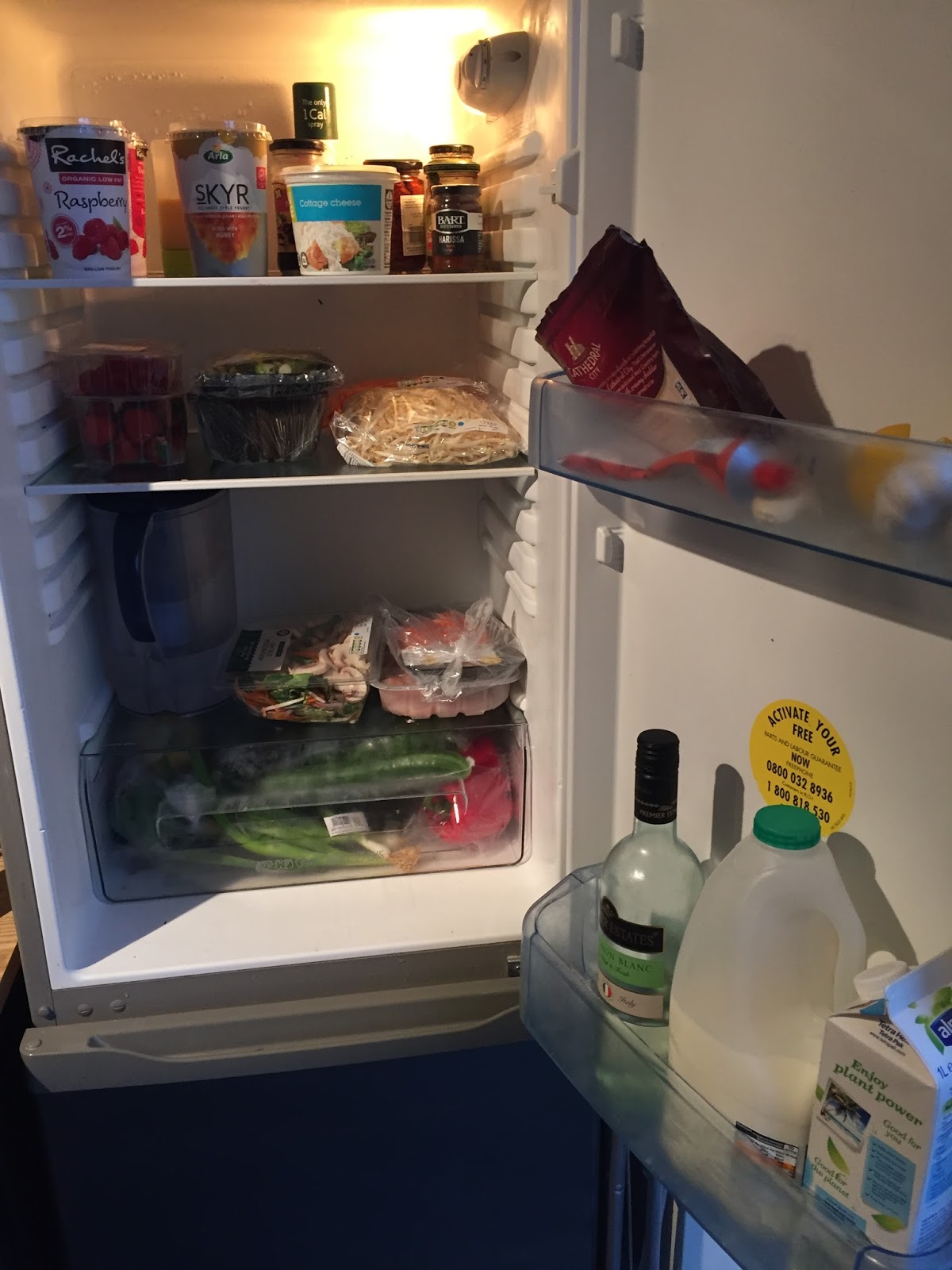
Fridge Raiders - what's in my fridge?

I find that by having a few healthy staples in your fridge, that you can rely on being in there every week, makes all the difference in maintaining your healthy eating regime.

About 3/4 of our weekly shop looks the same every week. Berries, yoghurt, eggs, spinach, peppers, mushrooms and lemons are guaranteed.

So let's take a look at what the fridge tends to look like, and please notice, there isn't a supermarket prepared meal in sight.


We always have lots of garlic and lemons in, and often root ginger. We have a slice of lemon in our green tea every morning and we love garlic. Lemon and garlic can be added to most dishes to improve flavour.


We usually have four - five tubs of yoghurt in as this is one food we eat more than anything. We regularly get Fage O% fat Greek Yoghurt and flavour it ourselves but also find Skyr and Rachel's to be just as filling and the lowest sugar options of any other flavoured yoghurts. Rachel's Coconut is my favourite but they didn't have it this week and we also get Skyr unflavoured to be even healthier. The protein content in all three brands is great with a low sugar and fat count.


Cottage cheese has become a regular on our shelves as of late and it is used in salad dressings, flavoured with either lemon, or more often Harissa which is featured in the image below. Again, high protein, low fat therefore making it an excellent and filling edition to a lot of meals.


Having these jars in is a great tip for adding healthy flavour to a variety of meals. The Harissa as mentioned helps enhance dressings or is great rubbed on salmon. The capers add a salty flavour to stews, casseroles or on top of white fish. Sundried tomatoes improve EVERYTHING. I often have them chopped up and mixed in with grains such as pearl barley for extra flavour. Olives are a great source of healthy fats and taste beautiful mixed with tuna and feta (also a weekly staple but not photographed this week) for a delicious spin on a Greek salad. We also often have in pesto and Thai curry paste (both regularly homemade but not always). I don't always use these in the traditional sense eg, pasta and curry. I rub them on meats and fishes to add extra flavour when baking or stir the pesto through a grain salad for an additional light flavouring.


There is always some form of berry, often a rotation of blueberries, raspberries and strawberries, in the fridge. We have them every morning with yoghurt which is then topped with no added sugar Alpen or Museli of choice. Generally, for smoothies we use frozen berries - it is more cost effective and makes the smoothie nice and cold. Carrot batons are great for when you feel snacky. We often find we eat through boredom so these keep our hands and mouths busy, stopping us reaching for biscuits.
We have mushrooms every week as they are our favourite in omelettes, stir fry and my Fajita bowl (recipe coming soon). We eat one or two of these for tea every week as they are fast and easy. Having a couple of staple dishes that you do every week is a great way to keep to a healthy diet - but more on that in a later blog. Beansprouts really bulk up a stir fry as well as other dishes and salads.
We ensure we have a couple of green veggies in each week that often go with a protein and sweet potato dish which is as straightforward as it sounds.


The stir fry packs supermarkets offer are excellent if you are tight on time which we were this evening. Otherwise, it is easy enough to throw together your own. We always have lots of proteins in and fish every week. Salmon is the most popular and chicken is used for teas and lunches.


The salad draw always has spinach, another lettuce variant (often rocket), cucumber, peppers, chillis, tomatoes and spring onions. These all generally make up the base of most salads. Peppers, onion and spinach are also heavily used on evenings for dinners such as omelette and Fajita bowls.


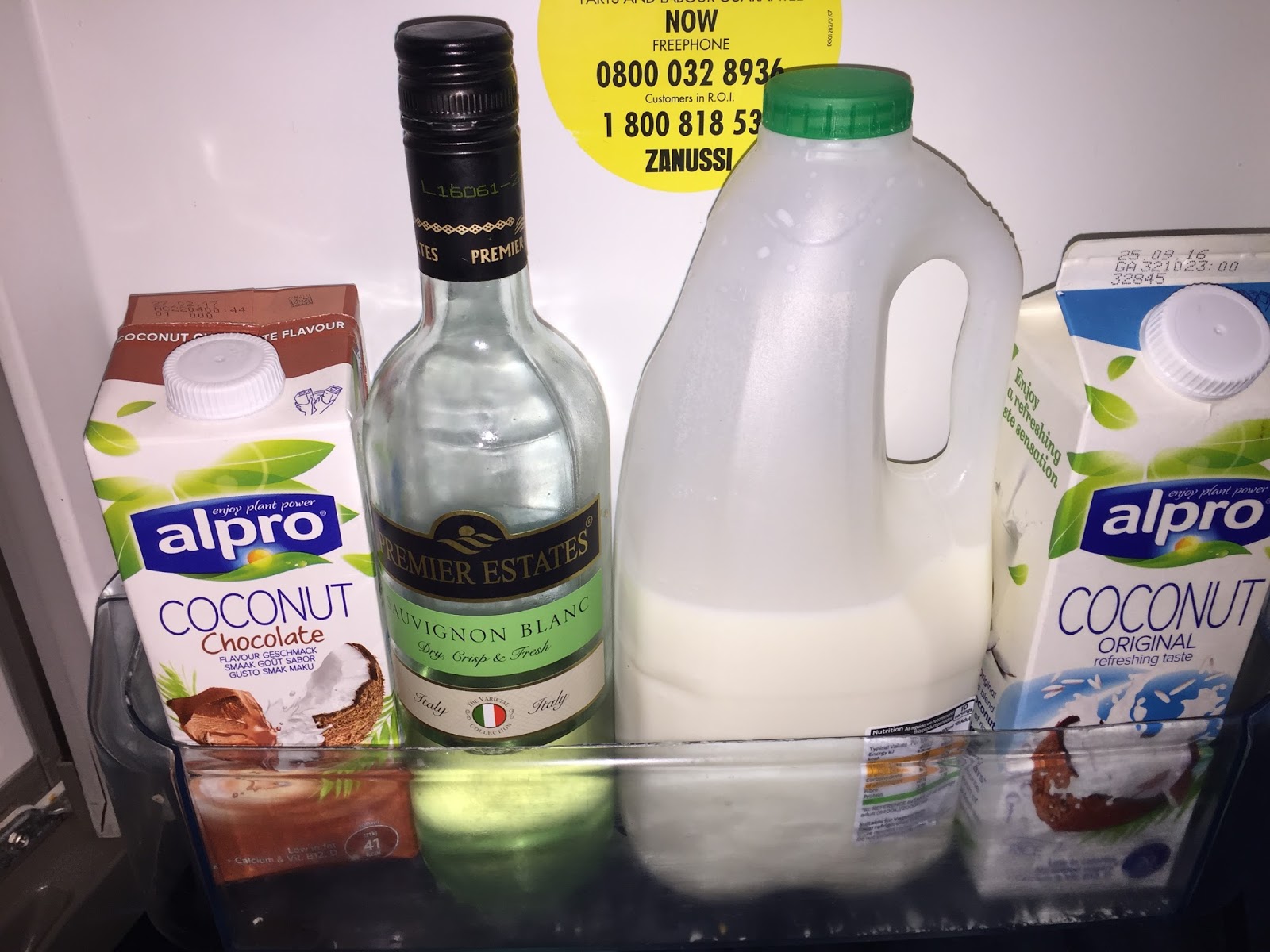
This week we had a bottle of white wine which was kindly gifted to us from a neighbour. We aren't heavy drinkers but do enjoy a glass here and there. Generally, we prefer red but this was a good white. It also flavoured a risotto I made and a paella. I drink dairy alternative milks, I love cows milk and drink that too but find I bloat if I consume too much so I use coconut, almond or more recently cashew milk for my museli so I can afford to have an occasional glass of milk to indulge. Matt however, drinks cows milk and doesn't like my alternatives.

We both suffer with a big sweet tooth (hint's in the blog name), so I often find ways to satisfy it without feeling too guilty. We eat a lot of dark chocolate and find chocolate milks - which are also great post workout recovery drinks - are delicious. As I am also a milkshake fan, this kills two birds, or cravings in this case, with one stone. This Alpro coconut chocolate one is lovely and sweet, my fav at the mo.

I hope this has given you a little insight into how to adopt a healthy lifestyle. Let me know what's in your fridge and we can compare!

Monday, 1 August 2016

Eat the rainbow!

By now we all know the main principal of healthy eating is to have a good balance of the three macro nutrients, Carbohydrate, Protein and Fat.

But that's not the end of it. It is imperative to get as many vitamins and minerals into your diet as possible to make sure your body performs at its best.

Now, there are many ways you can try and do this but the easiest way to ensure you get plenty, is to eat the rainbow.

Obviously, I don't mean skittles, but if your plate is all one colour, it looks bland and boring. But if your plate is splashed with reds, greens, oranges etc not only does it look more interesting but it provides many more nutrients. Each one can really benefit the other too, for example, eating vitamin C with iron increases absorption so combining a nice lean piece of steak with a red pepper salad is a great way to maximise nutritional intake.

Phytonutrients are what give foods their colour and each colour has its own unique property. For example, orange foods, eg carrots and sweet potato have carotenoids which help with vision (yes granny was right, carrots help you see in the dark) and blue/purple foods like blueberries have anthocyanins which help to keep your heart healthy. Now, I won't go into every single colour but you get the idea.

Every fruit, vegetable and grain has its own unique property offering a whole range of benefits. For the purpose of this blog, let me give you one of my favourite summer salad recipes, with additional nutritional info:


Rainbow Salad


Rocket: Only 25 calories per 100g. Strong delicious taste which stands up to most food. Laced with vits&minerals including: Iron, Calcium, Vitamin A, Vitamin C, Vitamin B6 and Magnesium.
Cucumber: 16 calories per 100g. High water percentage to help with hydration and feeling full. Source of Vitamins A, C and K, Magnesium, Potassium, Phosphorous and Manganese.
Yellow pepper: 27 calories per 100g. Excellent source of vitamin C. Also, Vitamin A, Calcium, Iron, Niacin, Magnesium, Vitamin B6, Folate, Potassium and Manganese.
Edamame: 122 calories per 100g. Great source of protein at 11g per 100g as well as high in vitamin and mineral content including, Vitamin C, Vitamin B6, Vitamin K, Iron, Calcium, Magnesium, Folate, Manganese.
Feta: This would be the "fat" in the salad and also acts as a dressing due to it's tangy flavour. 14g of protein per 100g, good source of Calcium, Vitamin A, Vitamin D, Vitamin B6 and B12 and Riboflavin which helps activate other vitamins.
Tesco Pink Slaw - Red and white cabbage, red onion and carrot. Calories = 38 per half pack (70g).


Enjoy x

Friday, 27 May 2016

Stop saying no to CHO!

I am tired of hearing about all these fad diets. One in particular that bugs me is "paleo" or "low carb"!

Why would you do this to yourself? Why can people  not understand that we need carbohydrates, they are our body's main source of fuel!

Ideally, at least 50% of our diet should be carbs. This same feeling is reflected to low fat too. I know there has been a little resurgence lately and more people are understanding that not all fat is bad but it is not enough.

I still have to speak with people daily who choose low fat things that are caked in sugar.

We need to find a balance. Yes, you may see the odd low fat product which isn't a con and if you're looking to reduce calorie intake, I would recommend it due to fat's high calorie content. A great example is Fage Total 0% Yogurt. It is actually genuinely good for you. High in protein and calcium, no fat and more importantly, no added sugar! It is creamy and delicious and you can flavour it how you like. That is the key, that way you know exactly what is going into your food and your body. Skyr is also a good brand FYI.

But this post is not about fat it is about carbohydrates.

Your body turns carbs into glucose or blood sugar which enters your cells, tissues and organs to provide energy. The key is to aim for starchy and fibre based carbs to keep you full and stay away from simple carbs - which is a term I am sure most people have heard of by now.

My other half recently spoke with a friend who told him he did two to three days per week low carb - we're talking 100grams per day max - to help him shred and look more defined and so Matt insisted we did it too. I caved and agreed, more than anything to prove a point. We were both starving all day and all we could think about was naughty foods such as pizza. The next day, carbs were reintroduced, and despite eating what we normally would, it wasn't enough, again we were hungry all day and couldn't be satisfied. Because our stores had been depleted. We had no energy in the gym either. The key thing to remember here is, we are both usually very active. All we wanted to do was sit on the sofa and eat food. I felt this little experiment proved my point.

Here are some top tips for consuming a healthy balanced diet with carbs.

Choose wholegrain (not brown bread, wholegrain!) and start your day with some slow releasing carbs like oats. If you don't fancy hot oats try my Overnight oats

Replace your usual sandwich casing with a wholegrain bread, wrap or pitta alternative. Check the ingredients list to make sure something wholegrain based is the first ingredient. Or move away from the traditional sandwich all together and make a tasty salad using brown rice, quinoa, bulgar wheat or whatever takes your fancy.

Eat whole fruit over fruit juice, less sugar, more fibre and certainly more filling.

Eat more beans and legumes for a good dose of slow releasing carbs and protein.

Don't be afraid of carbs, embrace them and learn which are good and bad. Obviously, we all know cakes, biscuits, chocolate etc.. are "bad" carbs so just limit the amount you eat. Don't cut them out though! Why should you, we all deserve to enjoy something a bit naughty once in a while. It stops us bingeing if we don't restrict ourselves too much. Just learn moderation. Eat well most of the time and exercise. I think I have said before but the 80/20 rule is the best thing I have heard. Eat well 80% of the time, enjoy whatever you want to eat the other 20%. Happiness is the real key to good health!

Tuesday, 26 April 2016

A day in food

I have a few staple healthy meals so I thought I would share another trio of recipes.

These three dishes encompass a day of food in our household. Monday tends to be egg night so I have a few eggy recipes in my arsenal as they are quick, healthy and yummy. This particular one can also be served at breakfast or lunch and as it is such a popular choice between myself and Matt, it made the cut for this post.

There isn't a carbohydrate in the image but this dish needs one to compliment it really, a nice slice of wholegrain toast sat under this is perfect. We had a crumpet with it recently as that is what we had left over. But that's just another example of how flexible healthy eating can be.

The Stages of the Egg

These eggs are cooked in a yummy tomato base made up of with whatever you like really. Usually, I start with garlic and onions and throw in whatever veg we have, spinach and mushrooms is great and then tip in chopped tomatoes. I added a chopped up rasher of bacon too recently which was left over. As mentioned, this is such a flexible and versatile dish, you can make it your own!

Make some wells in the sauce and crack in some eggs, give them five minutes to cook through and bob's your uncle. I have to say, it may be yummy but certainly it isn't the prettiest dish to photograph.

I love salads. I hate when people perceive salads as the bog standard lettuce, tomato and cucumber -boring! I experiment with different ingredients and new recipes all the time. It isn't hard and doesn't take up any more time then any other lunch prep would. Often you can make enough to last a few days too.

This (almost) raw Pad Thai salad is one of my latest creations. I draw inspiration from various cook books such as Get the Glow (the most recent edition to my collection) and Jamie's Superfood (my current favourite) and make my own versions of salads based on something I see in other places.


Almost Raw Pad Thai

The Pad Thai combines wholewheat rice noodles with finely sliced veggies. Just choose your favourite it's easy! Then simply make a dressing, this had lots of lime juice, tahini and soy sauce. Ooze it over the salad and let the flavours come together. Yum.


All  ingredients and the final result of the overnight oats (including in a to go tub)


Overnight oats are one of our favourite breakfasts, perfect for those with a busy lifestyle who need a grab and go breaky. The best part is, it takes a matter of minutes to prepare the night before, and if you want you can prepare two days worth.

All you need is a banana, mash it up, mix it with oats and milk and let it soak over night. I often include other soft fruits, mainly berries when mashing up the banana. It is so tasty and if you have a sweet tooth (like me) add some extra honey into it too.

Then, when you wake up, grab it out of the fridge and eat it. Hey Presto!

I will put the full recipes up on my page here in the next couple of days.

Happy eating! <3


Tuesday, 16 February 2016

A healthy mind makes for a healthy body

About 18 months ago, I wrote a blog raving about a calorie counting app that I swore by.

This blog is actually going to contradict that a little bit as I am going to talk about why I will not use it, or any other cal counting app, anymore.

I absolutely agree with counting calories when you need to lose a significant amount of weight, I mean at least more than half a stone - which at one point, I did and the app helped. But once you're at a healthy weight I believe Kcal counting may be a little unhealthy, and I am talking from first hand experience here.

I inputted my food and drink intake as well as my exercise routine religiously every single day. This worked for me at first as this app in particular (I can't speak about any others) was great at showing me how many calories I was consuming. Not only that but it showed me my macro intake. With this app I could see the balance between carbohydrate intake, fat intake and protein intake and it helped me find a balance.

But, after a year or so, maybe even less, I had taught myself the basics to good nutrition and I had a rough idea of what foods were high in calories, as well as carbs, fat and protein, so I had a good idea of what I was eating and putting into my body.

I firmly believe that once you are at this point you have already achieved success, whether you are looking to lose weight or gain more energy. By then you should be in a habit that will keep fueling you with the right type and amount of food you need without having numbers staring you in the face.

There may come a point when your body needs more than 1,200 calories (based on my needs not everyone else's) because you have more lean mass, and you can up your intake using the right foods without gaining weight.

However, if at this stage you are still calorie counting, chances are you haven't revisited your ideal calorie and macro nutrient intake. This is where the problem lies.

I was feeling hungry a lot, so when I was updating my daily diary I was beginning to see I had gone over my "requirement" according to the app.

This led to a vicious circle of self loathing, punishment through starvation and then binging due to stress and angry feelings.

I was beginning to feel very negative about myself, believing I was greedy and out of control.

In the end I told myself to stop counting the calories because I didn't need to see those numbers every day they just made me feel bad. I knew roughly when to eat and how much to eat. I knew which foods worked for my body, would give me more energy and wouldn't make me pile on the pounds. So I just stuck with that.

More than six months down the line I feel better than ever (and that is including eating over the Christmas period). I eat well, and I eat when I am hungry. I occasionally eat bad food and binge but that is okay, because generally I eat good food and don't feel like i'm starving all the time. I enjoy my food now as I don't have any numbers staring at me and making me feel guilty.

I also believe that the more you think about the food, which you do a lot if you have to constantly update a diary, the more you want food. And often, you want to rebel against the numbers or get an attitude which says I don't care anymore, before reverting back to guilt.

I enjoy what I want when I want. The proof is in the pudding, I do not feel as low in myself anymore, I can look in a mirror and compliment myself, rather than grab a fat roll and tell myself it's because I had 150 calories more than my limit yesterday.

Like I said, calorie counting has its pros and cons. For me the pros were in the beginning and once I hit my healthy weight the cons came into play. If you are at a healthy body weight, then start taking care of your brain's health too. It will all fall into place then.


Saturday, 2 January 2016

Christmas left overs to revive you


Post-Christmas bloat is familiar to us all. Even for the nutrition and health conscious, the Christmas binge cannot be avoided. Some indulge more than others but never-the-less, pigs in blankets, tubs of chocolates and boards of cheese get the better of most of us.

I have to admit this past week I have barely touched any form of fruit.

So tonight I packed our dinner with a whole host of nutrient dense foods whilst using up left-over Christmas staples.

I had already made my own stock (known as bone broth these days) by boiling the left-over turkey carcass with some root vegetable for hours, I created my own, incredibly good for you stock. I do this with most left over meat bones, it really is worth it.There are more minerals and vitamins hiding in the bones than in the rest of the animal - so without the broth you would seriously be missing out on a fantastic nutritious hit.
"Bone broth"

Put it in a pan and cover with water, boil and then simmer for however many hours you have spare.

I used this stock to create a Christmas broth medley. Sprouts, herbs and pancetta were left over from the big day, so by adding chicken and some other vegetables that I always have in, I was able to make a delicious hearty tea.

Miscellaneous Veg

I added pearl barley, sage and thyme into the broth and let it cook away. While that cooked I chopped the pancetta, mushrooms and sprouts up and fried them in a little butter and olive oil until crispy. I added sage and thyme to the pan to cook and at the last minute added crushed garlic.

When I was about 4 minutes away from completion I added finely sliced chicken breast to the stock and pearl barley pot and finally, I threw in some spinach at the last minute.

Once everything was cooked and seasoned to taste I dished out the stock concoction and spooned the pancetta, mushroom and sprout medley on the top.

Finished dish

It was deep in flavour and full of goodness. I recommend it to anyone wanting to use up any left over foods from the festive season, or even for a quick evening tea.

Thursday, 3 December 2015

Eggs for the win

I want to talk a little bit about eggs.


Eggs got a bad rep in 1988 when Edwina Currie, who was the health minister at the time, decided to make a statement to the nation that eggs were infected with salmonella.

I don't really know where that came from but I do know there were only 26 reported cases of salmonella that year and if you compare that to the amount of eggs eaten (we're talking tens of millions) it seems a little ridiculous.

Unfortunately that has left some people, even now, weary about eggs. However, they are an incredible source of nutrition and should be regularly eaten.

People also associate eggs with high levels of cholesterol however it isn't as bad as you may think. Yes one egg has roughly 62% of your recommended daily intake of cholesterol, however, the more of it you eat the amount you require changes. (Also to quickly note: the amount of saturated fat you eat has a higher influence on cholesterol build up).

To quickly summarise, your body needs cholesterol to survive and the liver creates it itself. But if you are ingesting cholesterol then your liver doesn't need to make as much so it balances the requirement out. So two eggs a day is perfectly okay.

Consider this, an egg has so much nutrition within it, it can form a living being (the chick). Just imagine how good it is for your body.

Not only is it a great source of protein but it is packed with a range of 18 different vitamins and minerals including the all important, Vitamin A, Vitamin D, Vitamin B2, Vitamin B12, Folate and Iodine, which all play an essential part in keeping your body healthy.

I love to have omelette night on a Monday. It is quick, convenient and healthy (as long as it is filled with the right ingredients). Mine is often filled with spinach, sometimes chicken sausages and lots of other veg, topped off with a small sprinkling of cheese (Applewood smoked or Parmesan have such great flavour you barely need any).

Alternatively, I also make great baked eggs in a spicy tomato sauce, now that is to die for. Watch out for the recipe soon!...